June and July Edition
STORYTELLERS: reading, writing, and encouraging
ST. GEORGE’S WRITERS
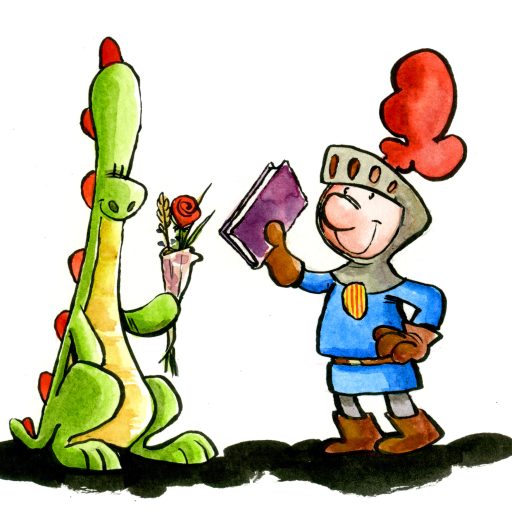

We’re been telling stories since long before we developed a writing system to record them for posterity. If you remember your Beowulf, you’ll recall that the old scops (pronounced “shops”) gathered everyone in the great halls in the evenings to hear of the deeds of their heroes. The mead the thanes passed around went well with the imagery of dragons guarding hordes of gold, knife fights in icy oceans, and the sound of crunching bones in battle.
But before the Angles, Saxons, and Jutes, Homer and Virgil entertained thousands as the equivalent of best-selling novelists of their times, even though both were likely illiterate. They didn’t need to read and write; they had their voices and bodies, their imaginations and memories. Stories are stories, no matter how we consume them.
Today the audio book is on equal footing with the printed word, whether digital or paper. What is non-negotiable is that the story must be told first. As Faulkner says, if a story is in you, it must come out. So the world is ours now, if only for a fleeting moment. We have the pen, and the mead bowl is ours.

“If there’s a book that you want to read, but it hasn’t been written yet, then you must write it.”
-Toni Morrison
William Shakespeare was born to tell stories. The son of a local, somewhat dishonest, politician, Shakespeare was most likely expected to become a glovemaker like his father, or a farmer, like his mother’s people. But he was remarkable. He had an almost perfect memory, from what scholars can deduce, giving him the ability to remember details about countries and cultures far removed from his own. He was an actor himself, a wordsmith, a humorist, a philosopher, a scholar of the Bible — all things that stitch together such depth in his works and leave us as devoted to them today as the Elizabethans were during their time.
D.H. Lawrence, Edgar Allan Poe, Nathaniel Hawthorne, George Eliot, Mary Shelley, E.M. Forster, Oscar Wilde, Jane Austen, Charlotte Bronte, Edith Wharton, F. Scott Fitzgerald, Flannery O’Connor, Eudora Welty, Zora Neale Hurston, James Baldwin, Truman Capote, Harper Lee, Langston Hughes, Alice Walker, Thomas Pynchon, Amy Tan, Margaret Atwood, Toni Morrison, Louise Erdrich, Cormac McCarthy, James McBride, Zadie Smith. The list is endless.



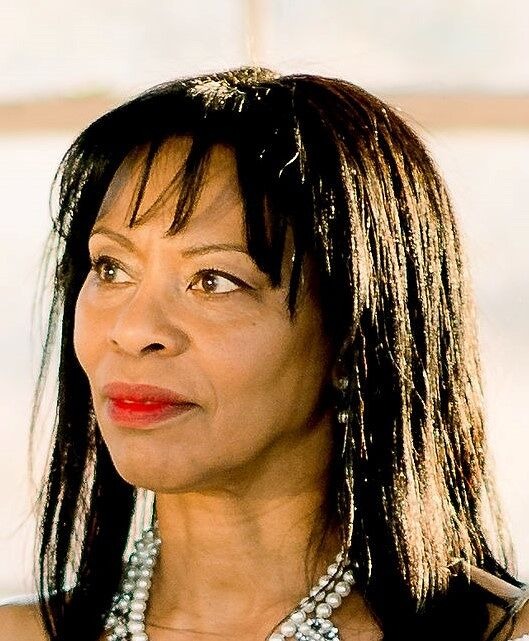

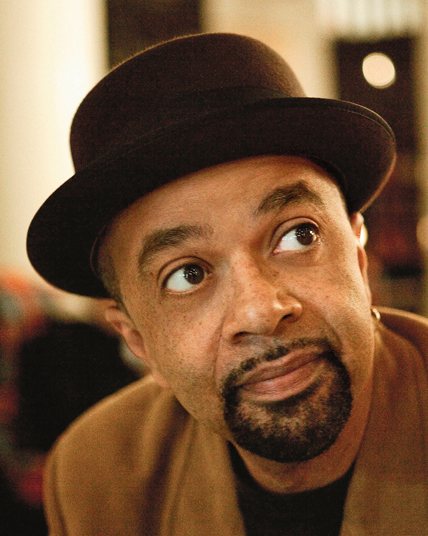


Above, clockwise from top left: Linda Wickersham, editor; Diane Windau, Writer of the Month; Ethan Lowery, Reader of the Month; Malanna Henderson, Community Member of the Month; Dr. Stephen Berk; James McBride, author (whose work we will excerpt next month); Dr. John Cooper Clarke, poet; Mary Karr, poet, memoirest.
We focused on the art of memoir in May (the links at the bottom of the page will catch you up if you missed anything). Diane Windau has graciously shared an excerpt of the memoir she is working on which she began in the class on the next page.
Memoir and Poetry in the Rearview; Prose on the Horizon
June saw us tackle poetry. We are integrating literary devices into our writing, and poetry offers a fertile ground for sound devices and figurative language (literary devices linked at the bottom).
Our sessions themselves cannot last long enough to finish the work SG writers begin, and not everyone can make it to the meetings. Writers should always feel free to email work to me at the email address in the link tree for feedback and encouragement.
July will be all about writing fiction – short stories and the novel. Plan now to attend!
Next Session: July 13, 3:30 – 5; Email lleawickersham@gmail.com for location
Diane Windau shares an excerpt of her memoir-in progress:
One October day in 2023, my mom stopped eating.
Stopped is not the right word though. Stopped is too vague. Stopped is inaccurate.
Let’s be precise here.
My mom started dying. Actively.
My mom chose to stop eating food … not because she wanted to.
But because someone from the other side told her to.
My dad thought it was a demon.
Or hallucinations from Alzheimer’s.
Doctors couldn’t help during multiple hospitalizations.
The Korean pastor my dad called came over and we held a prayer session for her.
We cried. We begged her to eat.
But that someone she muttered to regularly only gave in on occasion, permitting my mom a bite or two here. A small sip of water there.
I wanted to believe she would … could … get better.
That she could choose to eat again.
But deep within my heart, I knew.
I had been receiving signs — angel numbers — for months that grief was a natural human emotion and that our angels … or those on the other side would comfort me when the time came.
So I could only conclude that the someone my mom conversed with daily was someone to help guide her from this lifetime to one we couldn’t go to just yet.
I should’ve been ready.
Maybe my soul was.
But my heart wasn’t.
From the Editor
Beast on a Velvet Chair
(Or Sonnet I)
by Linda Wickersham
Slumber befalls him a summer afternoon,
This miniature once-jungled beast.
Dreams of bloodless meals testify
To his life of blue bowls of kibble,
Fish from a tiny tin,
And Amazon-ordered kitty fountain.
Once roused, he’ll stride toward woman;
Scratch him, she will, lest he’ll be
Forced to wreak wrath ‘pon her dwelling.
For she knows the power in his paws, the
Trembling begot by his terrible fangs.
But all will be well between (wo)man and beast,
She knows her place, and the beast knows his.
He peers through slitted eyes, waiting for her to bow.
Read, Read, Read
To be a good writer, you must first be a good reader. We love books and offer you our recommendations.
These characters and stories will revisit you for years to come. For a summer filled with days at the beach (with a book), in a hammock (with a book), by the pool (with a book), or catching a nice breeze (with a book), build your stack with these titles:
- Song of Achilles by Madeline Miller: it’s a love story, a war story, a coming-of-age story, a retelling of the Iliad – a masterpiece.
- Hamnet by Maggie O’Farrell: the story of Shakespeare’s beautiful, mystical wife and their marriage in the days leading up to their only son’s death and William Shakespeare’s writing of the play Hamlet.
- Prophet Song by Paul Lynch: winner of the Booker Mann Award in 2024, this book is set in a first-world country where no one believes the government can be corrupt enough to kill its own citizens and destroy their property – until it happens.
- Unruly by David Mitchell (the comedian, not the novelist): a serious but humorous look at the British kings and queens through Elizabeth I.
- Tom Lake by Ann Patchett: a mother who helps her husband run a cherry orchard recalls her summer playing Emily in Our Town at Tom Lake. Bonus: the audio is read by Meryl Streep.
- Mad Honey by Jodi Picoult: combine a murder mystery, teenagers and trans rights (and adults and trans rights, for that matter), domestic abuse, and bee keeping. The results will stun you.
- Demon Copperhead by Barbara Kingsolver: this retelling of David Copperfield, this time set in Virginia’s Appalachian mountains during the opioid epidemic won Kingsolver the Pulitzer in 2024, and rightfully so. The orphaned Demon will live in your head and soul long after you turn the last page.
- Stella Maris and The Passenger (companion novels) by Cormac McCarthy: these slim twins, written in the twenty months or so before McCarthy’s death, give us two of his richest characters. The novels are the stories of Bobby and Alicia Western whose father worked alongside Oppenheimer to develop the atomic bomb. Stella Maris is Alicia’s story, revealed in seven chapters as she sessions with her psychiatrist in a mountain-top asylum recalling happier days with Bobby and suffering mightily in his absence. In The Passenger, Alicia’s presence is overshadowed only by her absence. Bobby moves through his life with characters only McCarthy could cast, every one of them loyal, but none of them Alicia.
- Red Comet: The Short Life and Blazing Art of Sylvia Plath by Heather Clark: This Pulitzer Prize finalist from 2020 doesn’t disappoint Plath fans. Clark’s research is thorough and her disclosures are fair-minded and complete. This book is a treasure.
- Black Box by Amos Oz: In this 1986 Hebrew novel, readers paw through the detritus of the black box of an imploded marriage via an epistolary narrative. The novel’s unexpected hero brings wisdom and healing to the story.
- The Vanishing Half by Britt Bennett: Two African-American sisters in mid-century America make disparate decisions: one chooses to live as a white middle-class housewife; the other chooses to embrace her African-American heritage.
- The Testaments by Margaret Atwood: This sequel to The Handmaid’s Tale offers some surprising twists readers couldn’t have seen coming in the 1985 original. Atwood delivers satisfaction at a page-turning pace, reconciling her most classic characters and story.
- The Great Believers by Rebecca Makai: In this breathtaking novel, a 2018 Pulitzer Prize finalist, Makkai intricately weaves together characters and time period. The combination reflects the dichotomy of the gay rights movement finding its feet and the heartbreak of the AIDS epidemic gaining a foothold.
Dr. John Cooper Clarke, Punk Poet
At 76, John Cooper Clarke can boast that he’s spent more than half a century supporting himself quite handsomely as a working poet. While artists in all disciplines find supporting themselves solely through their craft challenging, only a handful of poets worldwide actually make it work. And for 50-plus years? John Cooper Clarke is a unicorn among unicorns.
Clarke was born in Manchester, England on January 25, 1949, a post-war baby whose generation was the first to benefit in previously unimaginable ways. Clarke himself contracted tuberculosis as a child and would have died had the newly developed drug streptomycin not saved him.
And his generation didn’t accept the status quo as easily as others had. Cooper-Clarke found poetry early in life – at age 12 or 13 – thanks to his pursuit of the word “beatnik.” As a result, he discovered Jack Kerouac and quickly decided he could outwrite the On the Road author easily, at least when it came to poetry. A career was born.
Clarke writes his poetry by candlelight and with an old-fashioned quill. “For me, it’s always been a case of computer or career. I’d never get any work done!” Clarke says, explaining his eschewing of technology. “I would get distracted. You’d find me dead weeks later, buried under a pile of pizza boxes.”
Clarke did fall into distraction in the ‘80s when he became addicted to heroin. “I died four times,” he says. “I came back, but medical action was called for. I’m the luckiest guy alive. Somebody up there likes me.”
Cooper-Clarke titled his memoir Luckiest Guy Alive in part because of his recovery from heroin.
The Lowdown on the Luckiest Guy Alive
First Job: A bookie’s runner
Most Famous Poem: “I Wanna Be Yours” (recorded by the Arctic Monkeys) “If I had a quid for every time that poem has been read at a wedding, I would be a billionaire.”
Married to: Evie Cooper-Clarke, with whom he credits for helping him overcome his addiction
Favorite Books: The Bible; Rat Pack Confidential by Shawn Levy; Catcher in the Rye by JD Salinger
Sources: https://www.theguardian.com/books/2024/mar/29/john-cooper-clarke-i-read-kerouac-at-12-and-figured-i-could-improve-on-it
I Wanna Be Yours
by Dr. John Cooper Clarke
I wanna be your vacuum cleaner
breathing in your dust
I wanna be your Ford Cortina
I will never rust
If you like your coffee hot
let me be your coffee pot
You call the shots
I wanna be yours
I wanna be your raincoat
for those frequent rainy days
I wanna be your dreamboat
when you want to sail away
Let me be your teddy bear
take me with you anywhere
I don’t care
I wanna be yours
I wanna be your electric meter
I will not run out
I wanna be the electric heater
you’ll get cold without
I wanna be your setting lotion
hold your hair in deep devotion
Deep as the deep Atlantic ocean
that’s how deep is my devotion
READER OF THE MONTH: FATHER ETHAN LOWERY
Father Ethan Lowery consumes books like a family of four consumes a cartful of groceries. The average volume lasts him only a week before he’s onto the next one. Over the past couple of years, Lowery has made a conscious effort to hone his taste in literature.
“I am drawn to critically acclaimed contemporary fiction written by those in my peer group who share my worldview,” Lowery explains. He names Martyr by Kaveh Akbar, who is also an acclaimed poet, as his favorite book from his past year’s reading.
“The first chapter of Martyr is the best example I’ve ever heard or read of a description of a relationship with God, especially by someone non-credentialled,” Lowery says of the book, which was shortlisted for the National Book Award.
He lists Tomorrow and Tomorrow and Tomorrow and The Emperor of Gladness as other favorites, and lists the books as all-time favorites as well as recent favs.
“I appreciate writers whose storytelling is more psychological than physical,” Father Lowery says. “I think reading is a bit like what it’s like to be in a parent-child relationship, and we need that.”
____________________________.
Author of Anatomy of a Kidnapping Dies
Dr. Steven Berk, author of Anatomy of a Kidnapping: A Doctor’s Story, died in the spring in Lubbock, Texas, where he lived and practiced for the last thirty-plus years, after a brief illness.
Dr. Berk leaves behind a wife and two sons as well as his extended family and a successful practice.
In March 2005, Dr. Steven Berk was kidnapped in Amarillo, Texas, by a dangerous and enigmatic criminal who entered his home, armed with a shotgun, through an open garage door. Dr. Berk’s experiences and training as a physician, especially his understanding of Sir William Osler’s treatise on aequanimitas, enabled him to keep his family safe, establish rapport with his kidnapper, and bring his captor to justice.
St. George’s Writers used an excerpt from Anatomy of a Kidnapping in their first session as a model for ex media res.
SOURCES, PAST PRESENTATIONS, & HELPFUL STUFF
COMMUNITY SPOTLIGHT:
MALANNA CAREY HENDERSON
Role(s) in the Community: WRITER, DIRECTOR, PLAYWRIGHT, DOCENT, RACIAL JUSTICE AND HEALING COMMITTEE MEMBER
Works Produced: ON THE WINGS OF FREEDOM (NOVEL); THE HISTORY LESSON (PLAY); UNCLE ALFIE’S DIARY (PLAY); AMOR AETERNUS (PLAY)

